

A New Era of Performance Advocacy Disability and the Limits of New York City’s “Diverse Entrepreneurial Inclusion” Agenda Policy Briefing
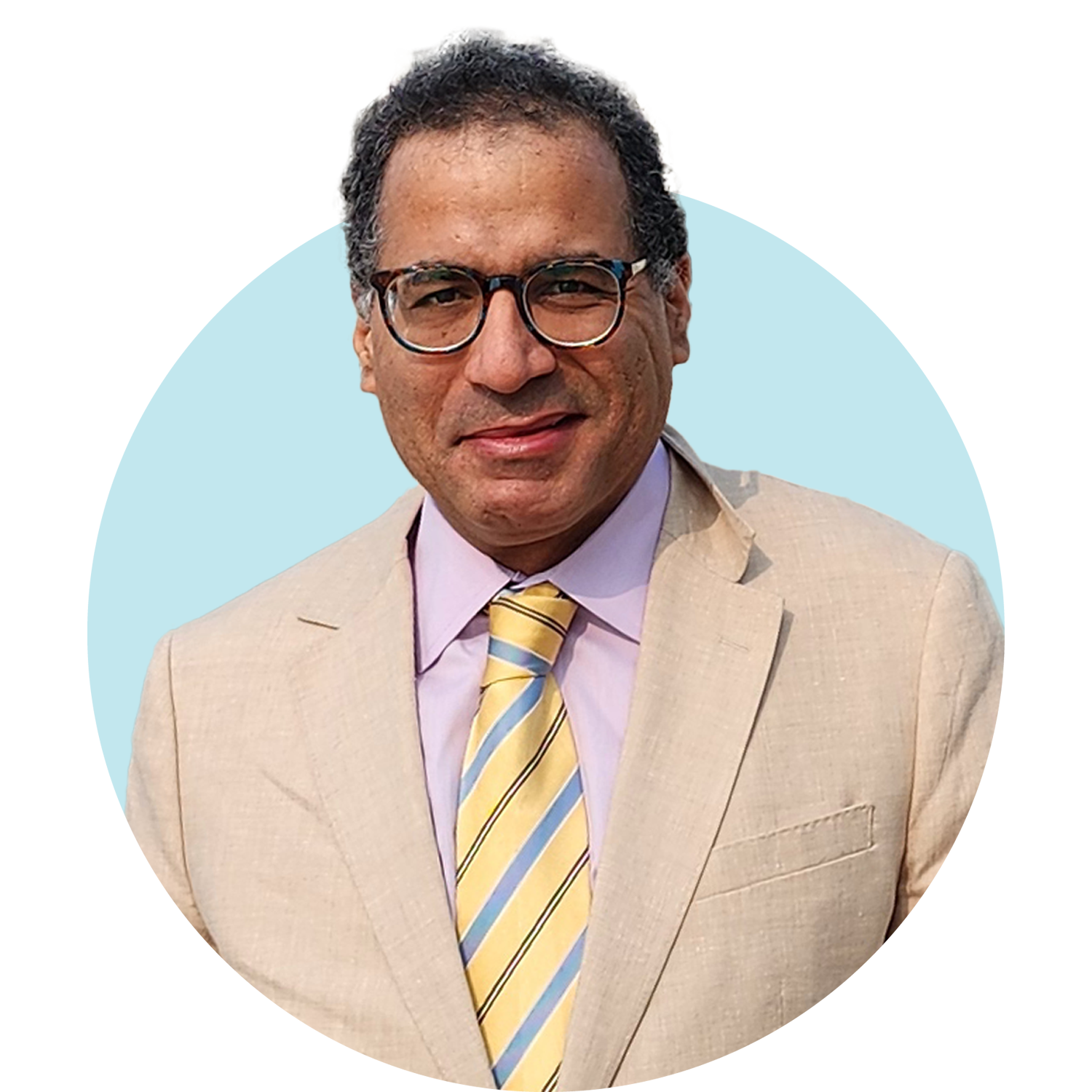
- Marc Safman
- Dec 17, 2025
- 5 min read
Executive Summary
New York City produces no shortage of equity-focused reports, task forces, and policy statements. What it lacks is sustained, measurable progress for the populations most structurally excluded from education, workforce participation, and entrepreneurship. The Public Advocate’s Diverse Entrepreneurial Inclusion report correctly identifies longstanding barriers within the City’s contracting and small-business ecosystems, including MWBE certification delays, fragmented procurement systems, limited access to capital, and under-resourced Small Business Services (SBS) programs.¹
However, the report omits disability entirely as an economic, workforce, and entrepreneurial category. This omission is not cosmetic. Disability is among the strongest predictors of labor-force exclusion, educational disruption, and economic marginalization in the United States.² Excluding disabled New Yorkers—particularly Black disabled New Yorkers—significantly weakens the report’s analytical rigor, policy relevance, and equity claims. This briefing demonstrates that accessibility is core economic infrastructure, not a niche accommodation issue, and that failing to integrate disability into economic policy perpetuates systemic exclusion.

I. The Limits of Equity Without Measurement
The Public Advocate’s report accurately identifies structural challenges facing minority- and women-owned businesses, including procurement complexity, limited technical assistance, and inconsistent agency coordination.¹ These barriers are real and merit policy attention. Yet equity frameworks that exclude disability ignore a population with:
One of the lowest labor-force participation rates of any demographic group²
Disproportionate barriers to education and credentialing³
Systemic exclusion embedded in digital platforms used for public services⁴
Without disability as a defined analytic category, equity assessments measure intent rather than outcomes.
II. Accessibility as Economic Infrastructure in a Digital Economy
Economic participation in 2025 depends on digital access. Licensing, banking, workforce training, hiring, procurement, and entrepreneurship increasingly rely on websites and applications that function as economic infrastructure.
Despite this reality, the Public Advocate’s report does not reference:
Digital accessibility standards
The Web Content Accessibility Guidelines (WCAG)
Documented accessibility compliance gaps
This omission is significant. The 2025 WebAIM Million report found that only 5.2% of the top one million websites met basic accessibility standards, with an average of 56 accessibility errors per page.⁴ Inaccessible systems function as structural barriers, preventing disabled users from accessing education, employment, and entrepreneurship opportunities.
When accessibility is excluded from economic policy, ableism becomes embedded in workforce and business development systems.
III. The Labor-Force Crisis the Report Fails to Address
Disability is one of the strongest predictors of labor-force exclusion in the United States. As of February 2025, approximately 75% of disabled Americans were not in the labor force, compared with roughly 18% of nondisabled adults.²
In New York State, available data indicates similarly severe exclusion, compounded by inconsistent disability employment reporting.⁵ The DeafBlind community illustrates the scale of the problem:
Only 35.9% of working-age DeafBlind adults nationally are employed
60.1% are completely outside the labor force
In New York State, DeafBlind employment drops to 33.7%, with 61.5% excluded⁶ The Public Advocate’s report does not address disabled workers, disability as a labor-force category, or the structural barriers preventing workforce entry and retention.
IV. STEM Access as a Civil Rights and Economic Imperative
Entrepreneurship begins long before capital access. It begins with literacy, numeracy, and STEM education—fields that drive innovation and high-wage employment. Students with visual and print disabilities face persistent barriers:
Accessible STEM conversions frequently cost $700–$1,000 per textbook chapter⁷
Materials often arrive weeks or months late⁸
Braille math and tactile graphics are incomplete or unavailable⁹
Digital learning platforms routinely violate WCAG standards⁴
As a result, many disabled students exit STEM pathways by middle school—not due to aptitude, but due to systemic access failures. STEM occupations are projected to grow 8.8% by 2029,¹⁰ yet people with disabilities represent only about 3% of the STEM workforce.¹¹ Braille literacy—one of the strongest predictors of employment for blind and DeafBlind adults¹²—is not addressed in the Public Advocate’s analysis.
V. Education, Employment, and Entrepreneurship as a Single Pipeline
Policy frameworks often treat education, workforce development, and entrepreneurship as separate domains. Research and lived experience demonstrate they function as a single pipeline.¹³
For disabled New Yorkers, that pipeline collapses early:
Inaccessible literacy and STEM instruction
Limited workforce entry and advancement
Restricted access to capital, procurement, and entrepreneurship programs
Entrepreneurship initiatives introduced without addressing upstream access failures are structurally incapable of producing equitable outcomes.
VI. The Erasure of Black Disabled New Yorkers
The report appropriately highlights racial inequities in entrepreneurship and contracting. However, it does not address disability as an intersecting factor.
Black disabled Americans experience:
Higher unemployment than Black nondisabled peers¹⁴
Higher poverty rates than white disabled peers¹⁵
Disproportionate discipline and reduced access to special education¹⁶
Lower STEM participation and credential attainment¹¹
Excluding disability from racial equity frameworks erases compounded exclusion and distorts policy conclusions.
VII. Policy Choices, Not Structural Constraints: The Ohio Example
New York City’s limitations reflect governance choices, not resource scarcity. Ohio’s House Bill 33 established a unified DeafBlind education and services system by:
Consolidating deaf and blind services under shared governance
Creating dedicated DeafBlind divisions
Securing stable funding
Implementing statewide accountability mechanisms¹⁷
By contrast, New York City lacks:
A DeafBlind office
A citywide Support Service Provider (SSP) or Co-Navigator program
Dedicated DeafBlind funding
A coordinated education-to-employment pipeline
VIII. Accessibility as an Engine of Innovation and Growth
Disabled Americans control an estimated $490 billion in disposable income and influence trillions more globally.¹⁸ Inclusive design improves usability, market reach, and return on investment across sectors. Technologies originally developed as accommodations—voice interfaces, OCR, real-time captioning—now define baseline digital infrastructure.¹⁹
By 2034, older Americans with higher rates of disability will outnumber younger adults.²⁰ The global disability market is projected to exceed $23 trillion, driven by aging populations and demand for accessible, AI-powered products.²¹
IX. Policy Recommendations
To achieve measurable outcomes, New York City should:
Establish a Centralized Independent Education Access Fund
Integrate NYC ATWORK into Workforce1
Create a Disability-Owned Business Enterprise (DOBE) certification
Establish a DeafBlind SSP/Co-Navigator program
Require SBS and MWBE accessibility training
Enact a NYC Accessibility Tax Credit
Mandate accessible STEM instruction and braille literacy
Publish disaggregated disability employment and entrepreneurship data
Conclusion
New York City does not lack assessments. It lacks accountability. Disability inclusion is not a separate policy track—it is a structural requirement for inclusive economic growth. The question before City leadership is whether to continue producing reports or to implement reforms that generate durable, measurable results.
Astoria, NY
December 12, 2025
Footnotes
NYC Public Advocate, Diverse Entrepreneurial Inclusion Report (2024).
U.S. Bureau of Labor Statistics, Employment Situation of Persons with a Disability – February 2025.
National Council on Disability, Breaking the School-to-Prison Pipeline for Students with Disabilities (2023).
WebAIM, The WebAIM Million: 2025 Report on Accessibility of the Top 1,000,000 Home Pages.
New York State Department of Labor, Disability Employment Statistics (latest available).
National Deaf Center on Postsecondary Outcomes, DeafBlind Employment Dashboard (2024–2025).
American Printing House for the Blind, Cost of Accessible Educational Materials (2023).
Government Accountability Office, Accessible Educational Materials: Barriers for Students with Disabilities (GAO-23-105).
National Federation of the Blind, The Crisis in Braille and STEM Access (2022).
U.S. Bureau of Labor Statistics, Employment Projections 2019–2029.
National Science Foundation, Women, Minorities, and Persons with Disabilities in Science and Engineering (2023).
Ryles, R., The Impact of Braille Literacy on Employment Outcomes, Journal of Visual Impairment & Blindness.
Georgetown University Center on Education and the Workforce, Pathways to Prosperity (2022).
Bureau of Labor Statistics, Race, Disability, and Employment (2024).
U.S. Census Bureau, Disability and Poverty in the United States (2023).
U.S. Department of Education, Office for Civil Rights, Civil Rights Data Collection.
Ohio General Assembly, House Bill 33 (2023).
American Institutes for Research, A Hidden Market: The Purchasing Power of Working-Age Adults with Disabilities.
World Economic Forum, Accessible Design as a Driver of Innovation (2021).
U.S. Census Bureau, Demographic Turning Points for the United States: 2020–2060.
Return on Disability Group, The Global Disability Market Size Report (2023). The Resource Key, $23 Trillion Disability Market (2025)

Written by Marc Safman
(917) 825-1471